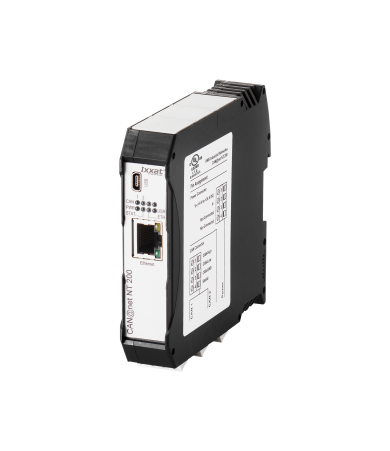
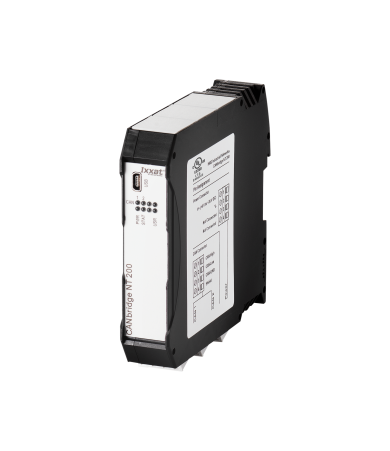
CANbridge NT 200
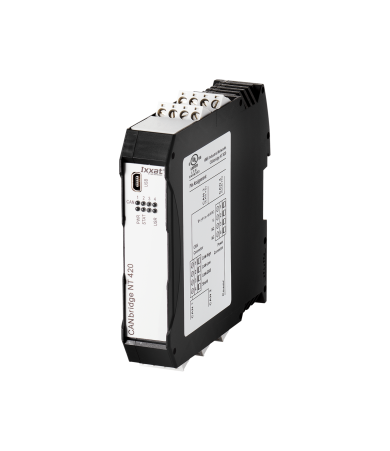
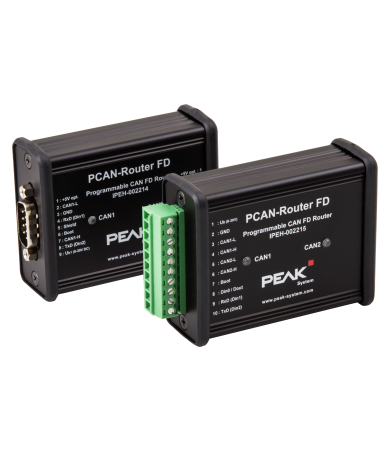
CAN Bridge with 2x CAN, galvanic isolation

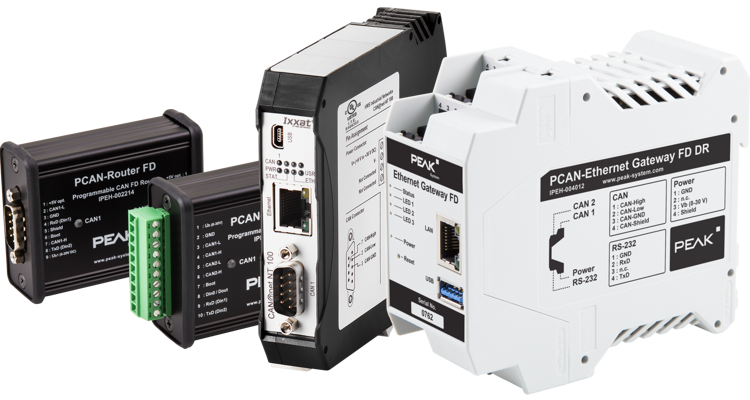
CAN Bridges and Gateways are components of the infrastructure that enable the construction of complex network structures. A CAN Bridge connects two (or more) CAN networks to each other. A CAN Gateway converts CAN messages to another type of network, such as Ethernet. If necessary, a second gateway can convert this back to a CAN network to create a CAN-Ethernet-CAN connection, for example.
These devices can actively influence the CAN message flow, for example by filtering messages, adjusting CAN IDs, and/or changing the bit rate. With bridges or gateways with more than two CAN ports, the distribution of the message flow can be controlled very precisely. In addition, these devices can automatically perform actions as soon as a specific event occurs.
Bridges and gateways are active components. They are based on the “receive (modify) forward” principle, whereby CAN messages are received from one subnetwork and then forwarded to another subnetwork.
Bridges—and the bridge functionality of gateways—enable CAN subnetworks that operate independently of each other. For example, they can have different real-time behavior or work with different IDs.
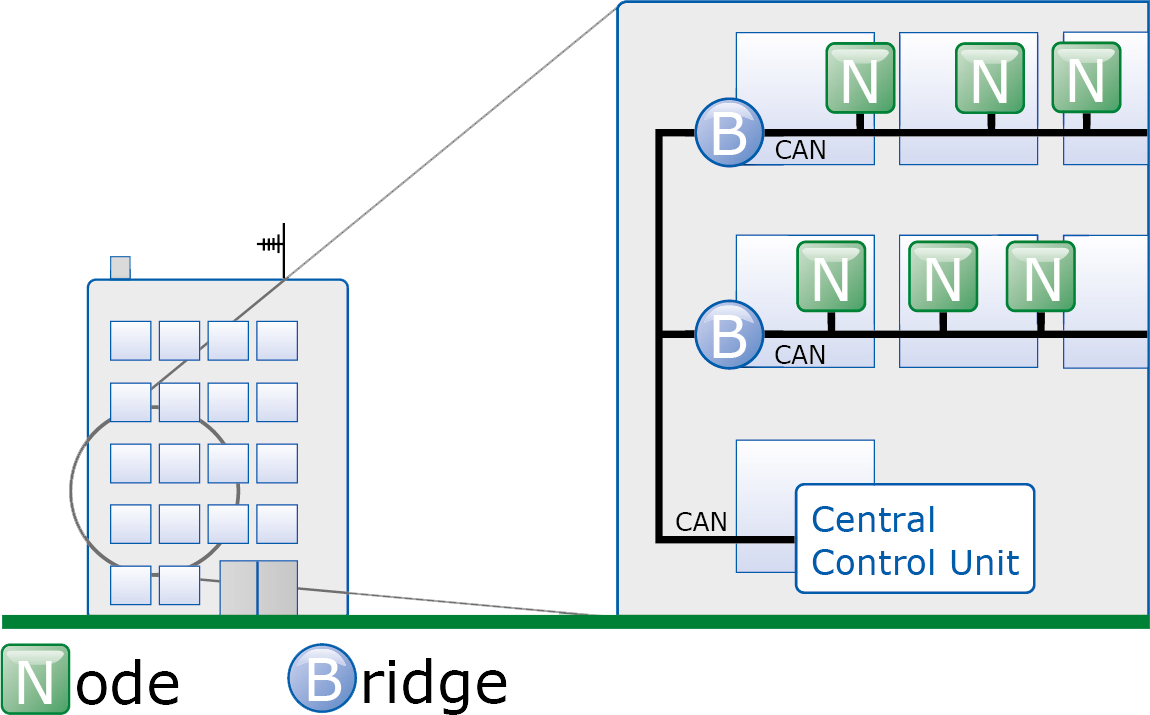
Unlike CAN repeaters, bridges enable the maximum size and length of the network to be expanded. After all, each segment is a separate CAN network. Bridges are also suitable for creating hierarchical networks in which information is only transferred to the connected subnetworks that are relevant to the subnetwork in question.
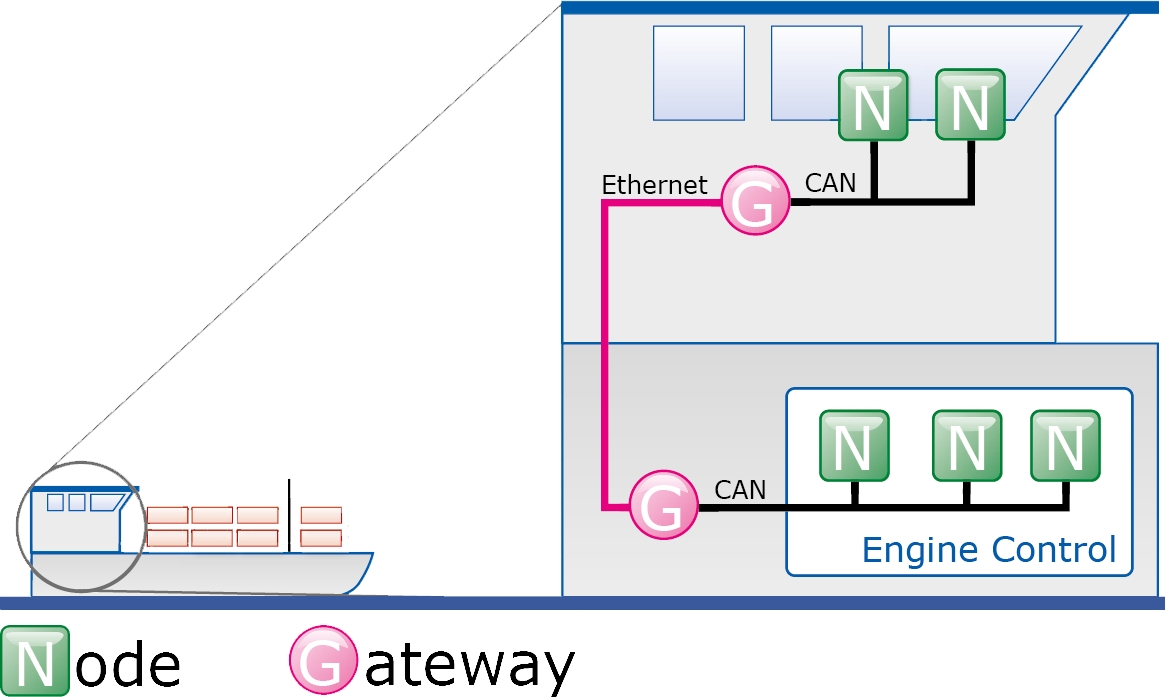
The bridge function can also be achieved with the help of two gateways. For example, two CAN Ethernet gateways can be used to set up a ‘CAN-Ethernet-CAN’ bridge that connects two remote CAN bus networks.
In addition to bridge functionality, gateways offer the ability to convert CAN messages to another network. This makes it possible to connect CAN networks to other communication networks.
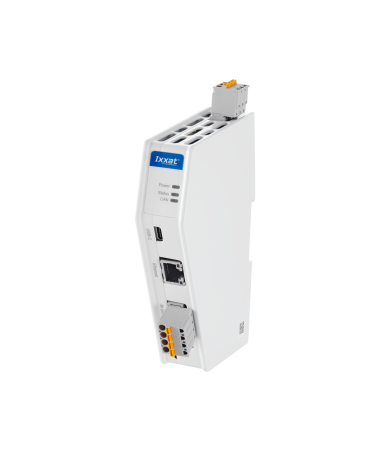
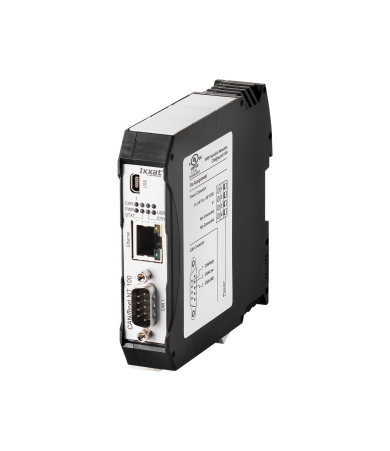
A CAN-Ethernet gateway offers multiple possibilities. In addition to the long-distance bridge mentioned earlier, such a gateway can be connected to a PC via local Ethernet. The PC driver recognizes this gateway and allows it to function just like any other PC interface. This creates a CAN-to-RJ45 interface.
Servers and other embedded controllers can easily control or monitor CAN networks via a TCP/IP socket without the need to install a driver.
Met een CAN Bridge kunnen CAN-systemen binnen bijvoorbeeld een gebouw voor elke verdieping worden gescheiden, waardoor de maximale systeemgrootte eenvoudig kan worden uitgebreid.
A CAN/Ethernet gateway enables CAN systems to be connected over long distances via Ethernet, e.g. for connecting the machine room to the control room on a ship.