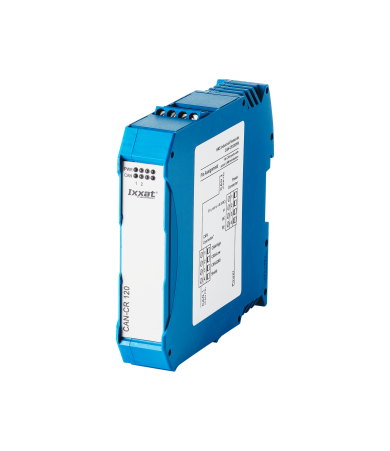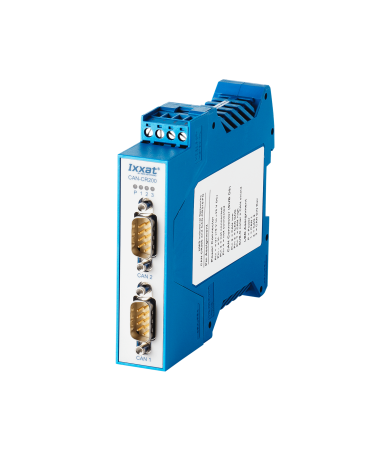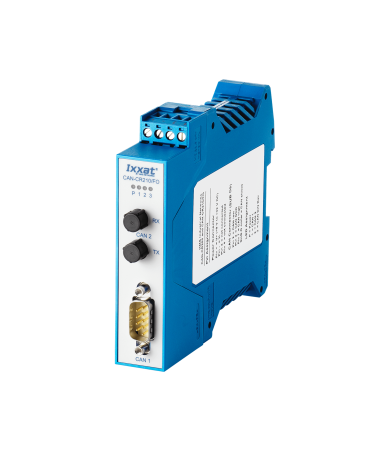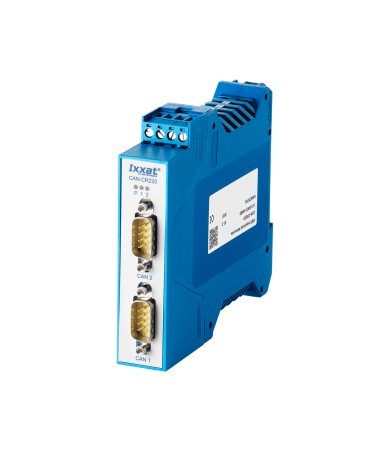
CAN/FD Repeater Standard
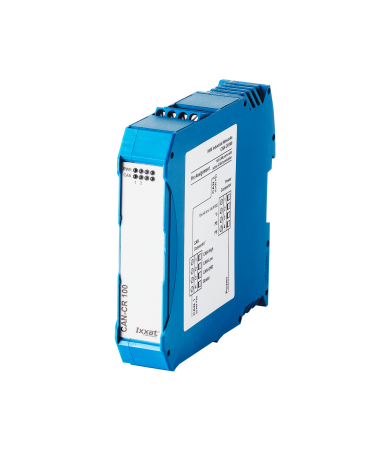
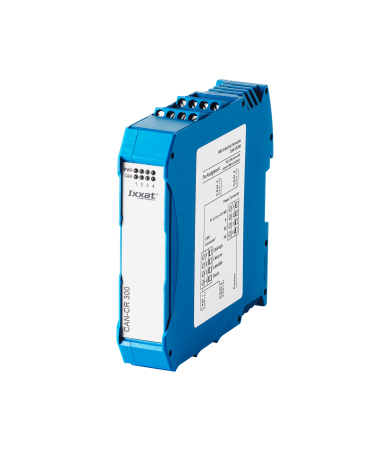
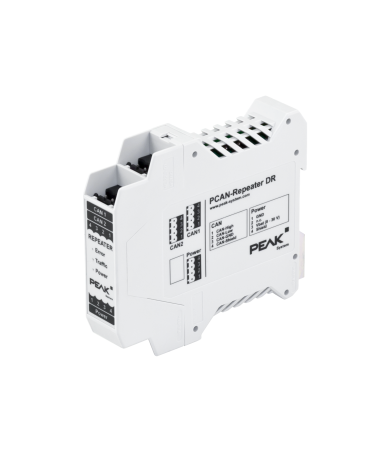
CAN Repeater with 2x CAN FD / CAN, galvanic isolation

Repeaters are used to establish a physical coupling of two or more segments of a CAN bus system. They can be used to implement tree or star topologies as well as for long drop lines. In addition, network segments can be electrically disconnected from each other because all repeaters are galvanically isolated.
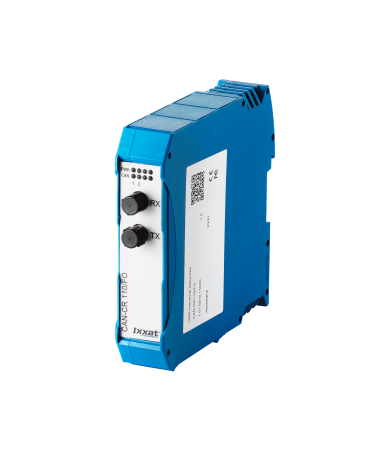
A repeater works much like a line amplifier, amplifying the bits. This makes the operation transparent, ensuring the entire network reacts exactly as before. Repeaters can transmit bits not only electrically, but also via light through a fiber optic (FO) cable.
The CAN channels coupled by the repeater are independent electric segments that can be optimally terminated in terms of signals. In this way topologies can be implemented that are not possible with a pure line of the bus due to electrical reflections.
According to the transceiver output capacities, the division of a CAN bus system into several subsystems, connected via CAN Bus Repeaters, increases the maximum number of bus nodes.
Another application of repeaters is the coupling of different physical CAN layers by means of high/low-speed repeaters, optical repeaters, or optical star couplers.
As signaling is not directed in CAN, the repeater logic has to translate the signals of the segment received into the other and has to ensure that the input signals are not back-coupled. In terms of signals, the repeater corresponds to a line with relevant delay time. Therefore, it cannot be used to extend a CAN bus system.
Using repeaters does not influence the real-time behavior of a system because in terms of transmission behavior it corresponds to a network that consists only of lines.
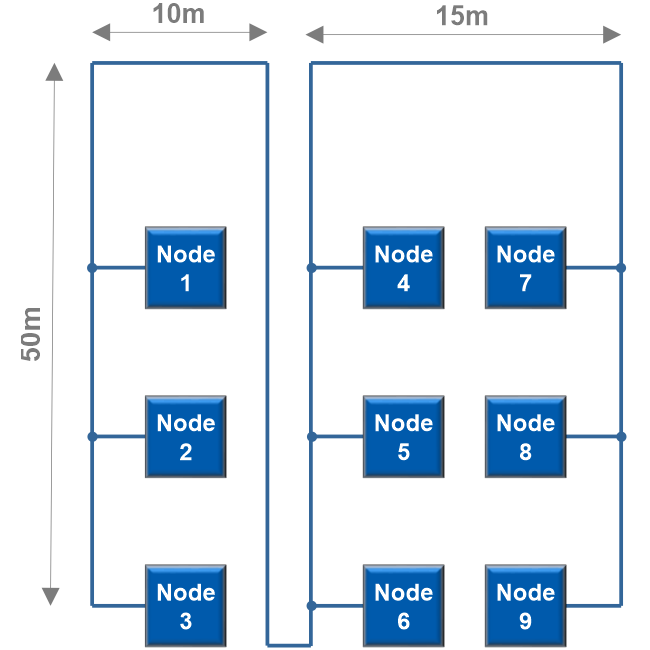
The example below shows a standard CAN bus structure, where all nodes should be connected to the same straight bus. Therefore, the CAN bus makes a U-turn to also connect the nodes in the middle.
The distance between the two nodes furthest apart (1/9) is 220 meters.
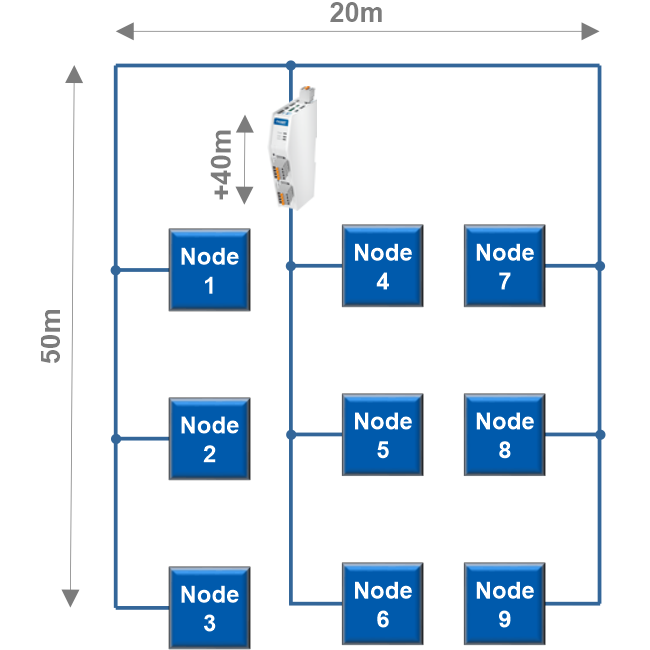
By connecting the middle nodes via a CAN repeater, the U-turn is no longer necessary. Note that the CAN repeater—due to the delay—virtually extends the subsection by 40 m.
The distance between the two nodes furthest apart (either 1/6 or 6/9) is 150 meters.
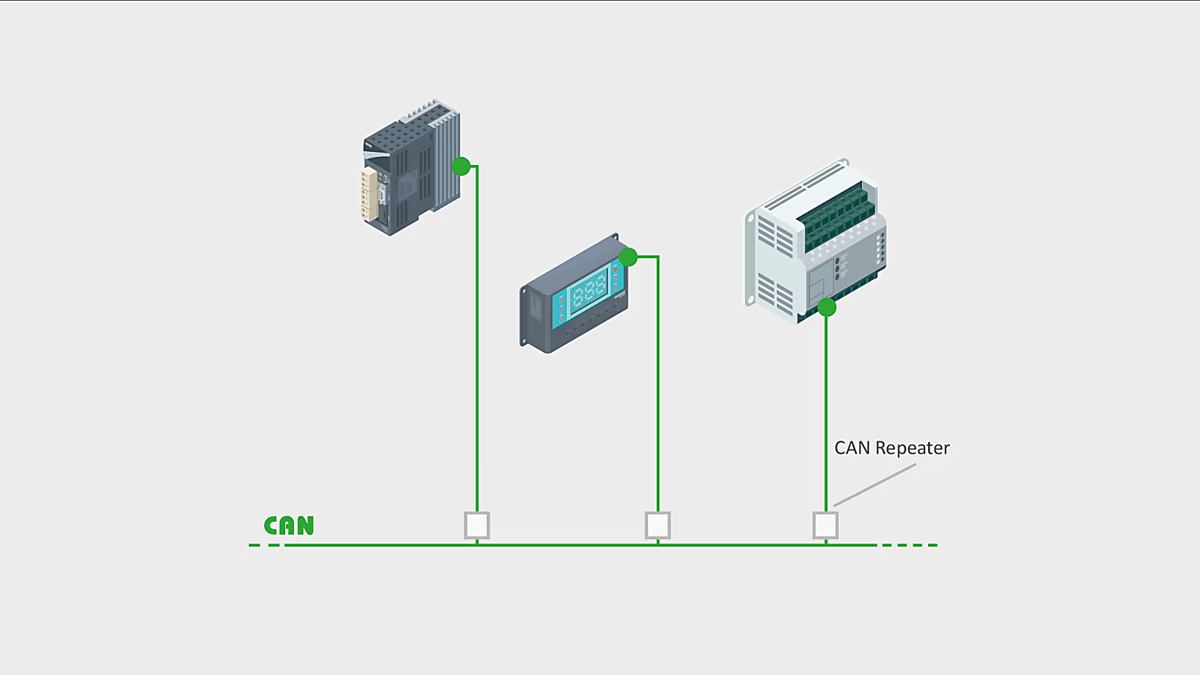
CAN Repeaters are crucial for optimizing the topology of CAN networks, allowing for the implementation of configurations beyond the basic line topology, such as star and tree topologies. The primary function of a CAN repeater is to regenerate the CAN signals. By using repeaters, network designers can extend the physical limits of a CAN network and they can increase the number of nodes. This capability is especially valuable in large-scale industrial settings where equipment might be spread over substantial distances.
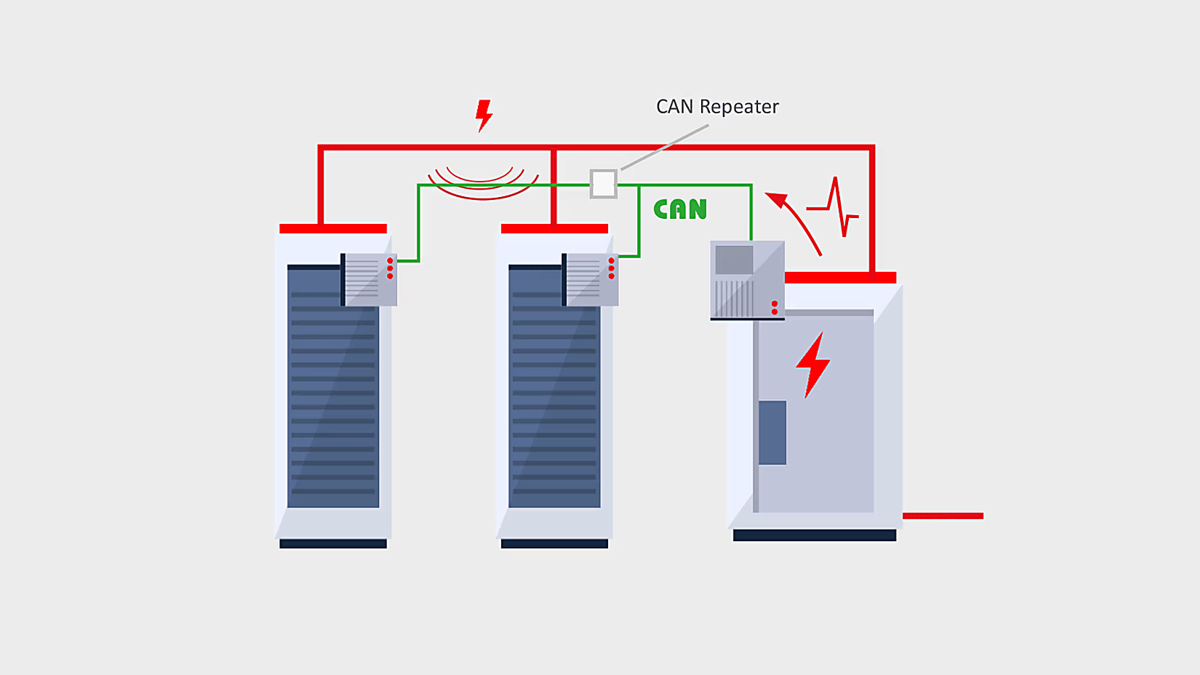
Electromagnetic interferences (EMI) can significantly disrupt the CAN signal integrity. CAN Repeaters contributes to reducing EMI influences within the network by regenerating the signal, thus dampening the noise picked up during transmission. The capability of repeaters to isolate and reconstruct signals means that disturbances from external sources are less likely to propagate through the network, ensuring cleaner and more reliable communications.
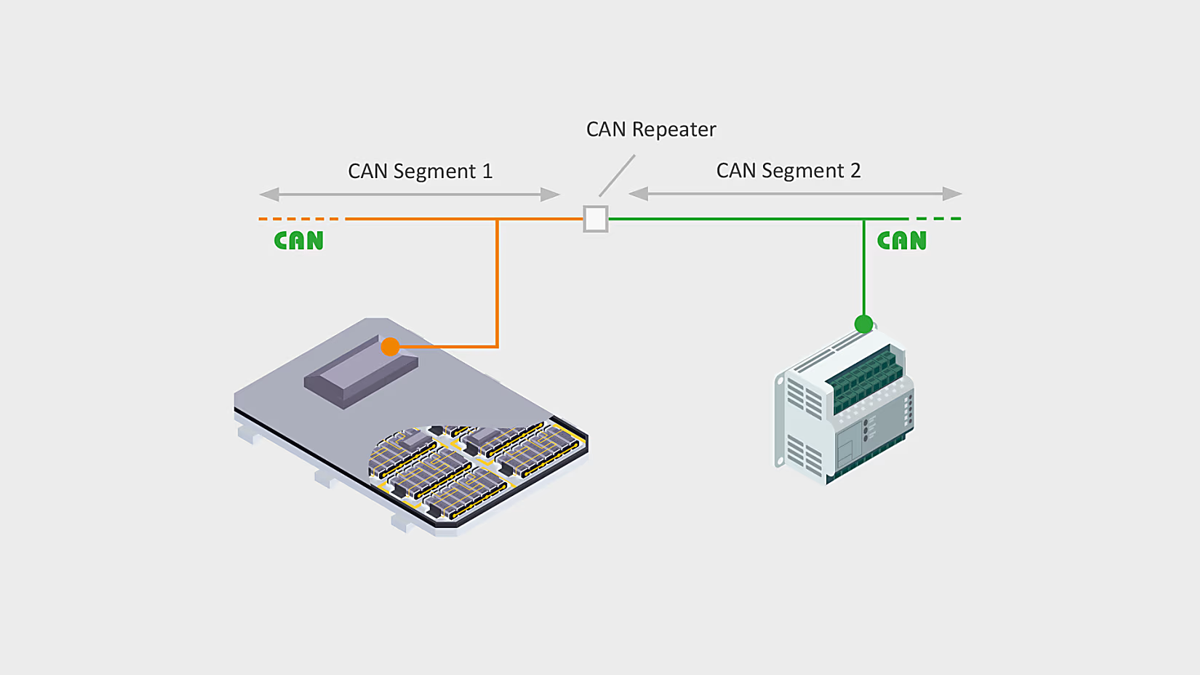
CAN Repeaters enhances signal quality within CAN networks by regenerating and retransmitting the signals as they pass through. This process helps to restore and stabilize signal strength and shape, countering degradation from extended transmission distances or electrical noise. The repeaters ensure that signals remain strong and clear over long cable runs, crucial for maintaining data integrity and minimizing errors in communication.
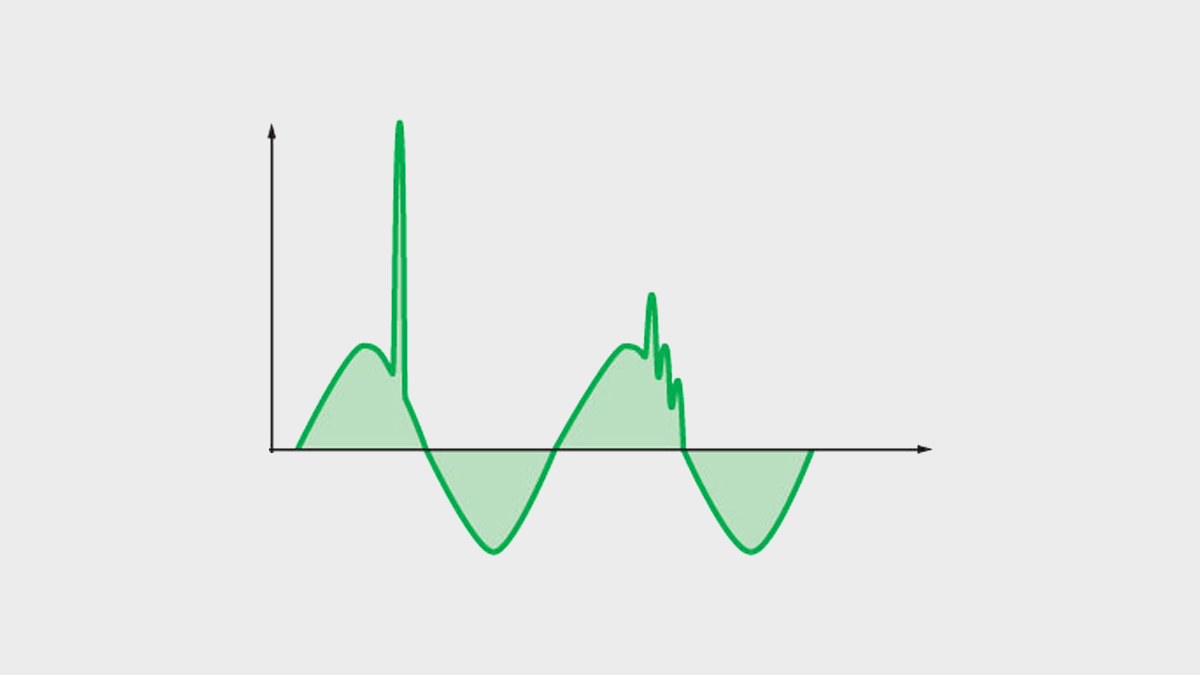
Galvanic isolation provided by CAN Repeaters serves as a critical protective feature for network components. The isolation prevents voltage spikes and other electrical hazards from spreading across the network, which can cause damage to sensitive electronics and lead to data corruption. By isolating different segments of the network, repeaters enable the overall resilience and safety of the system, safeguarding against both gradual degradation and acute electrical failures